
Key takeaways
What matters before you keep reading
01
A manufacturer-ready tech pack is a detailed handoff, not just a sketch, template, or measurement table.
02
The sections most likely to create factory questions are measurements, BOM, construction details, artwork, labels, and export context.
03
Judge AI-generated tech packs by the completeness and reviewability of the generated output.
Reader guide
Reader guide
A quick frame before the workflow details.
For
Founders, designers, technical designers, and product leads preparing a sample or factory quote.
Read when
Best read before sending a style to a manufacturer or comparing a template with an AI-generated draft.
You'll get
A send-ready checklist, section-by-section expectations, common gaps, and examples from a complete generated pack.
On this page
Follow the article through the long read and keep your place.
On this page
8 sections
A tech pack should include every section a manufacturer needs to quote, sample, build, review, and ask precise questions about the garment.
If the factory opened only this pack, it should understand what garment is being made, what is final, and what still needs review.
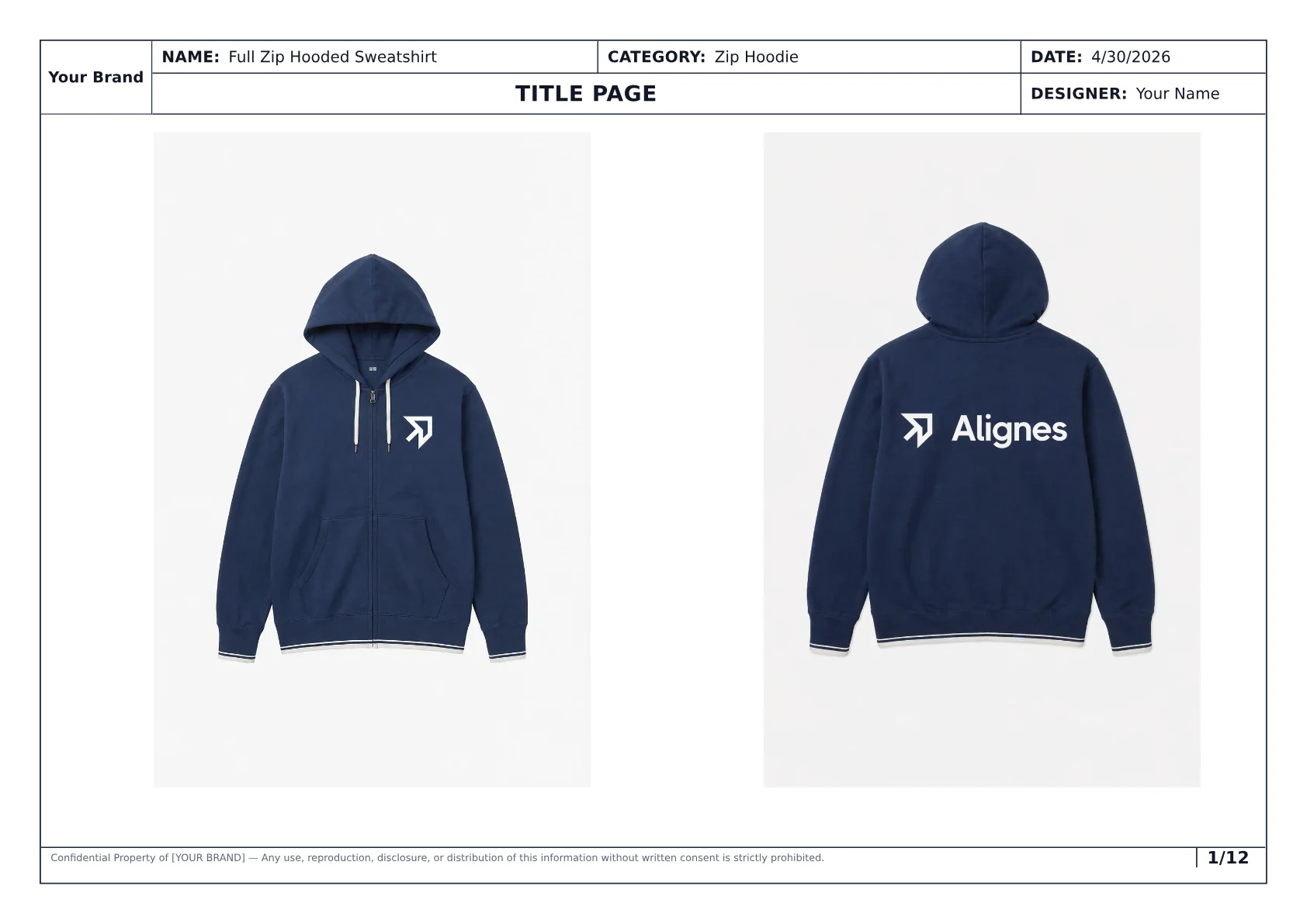
The first page anchors the garment: style, category, sample size, colorway, date, and page count.
The manufacturer-ready tech pack checklist
Use this as the core checklist before sending a style to a factory:
- style overview,
- front and back visual references,
- overview sketches or production-facing garment views,
- callouts and detail annotations,
- base-size measurements,
- points of measure,
- graded measurements or size-range notes,
- BOM,
- fabric and trim details,
- construction notes,
- stitch and finish expectations,
- labels and care information,
- artwork or print placement,
- colorways,
- packaging components when relevant,
- pending assumptions where relevant,
- current export package.
The exact order can vary. The standard is that the factory can inspect the garment without guessing from scattered references.
Style overview
The style overview tells the factory what it is looking at before the technical pages begin.
Include:
- style name,
- category,
- sample size,
- planned size range,
- date,
- sample or production stage,
- brief fit or design intent,
- visual context.
A weak overview makes the factory guess whether the document is the right dated export for the current garment.
Visuals and callouts
Visuals show the garment. Callouts explain the details a visual cannot carry alone.
Callouts cover production-relevant information:
- pocket placement,
- seams,
- panels,
- cuffs,
- hems,
- hood or collar construction,
- closures,
- hardware,
- artwork placement,
- trim placement,
- special finishes.
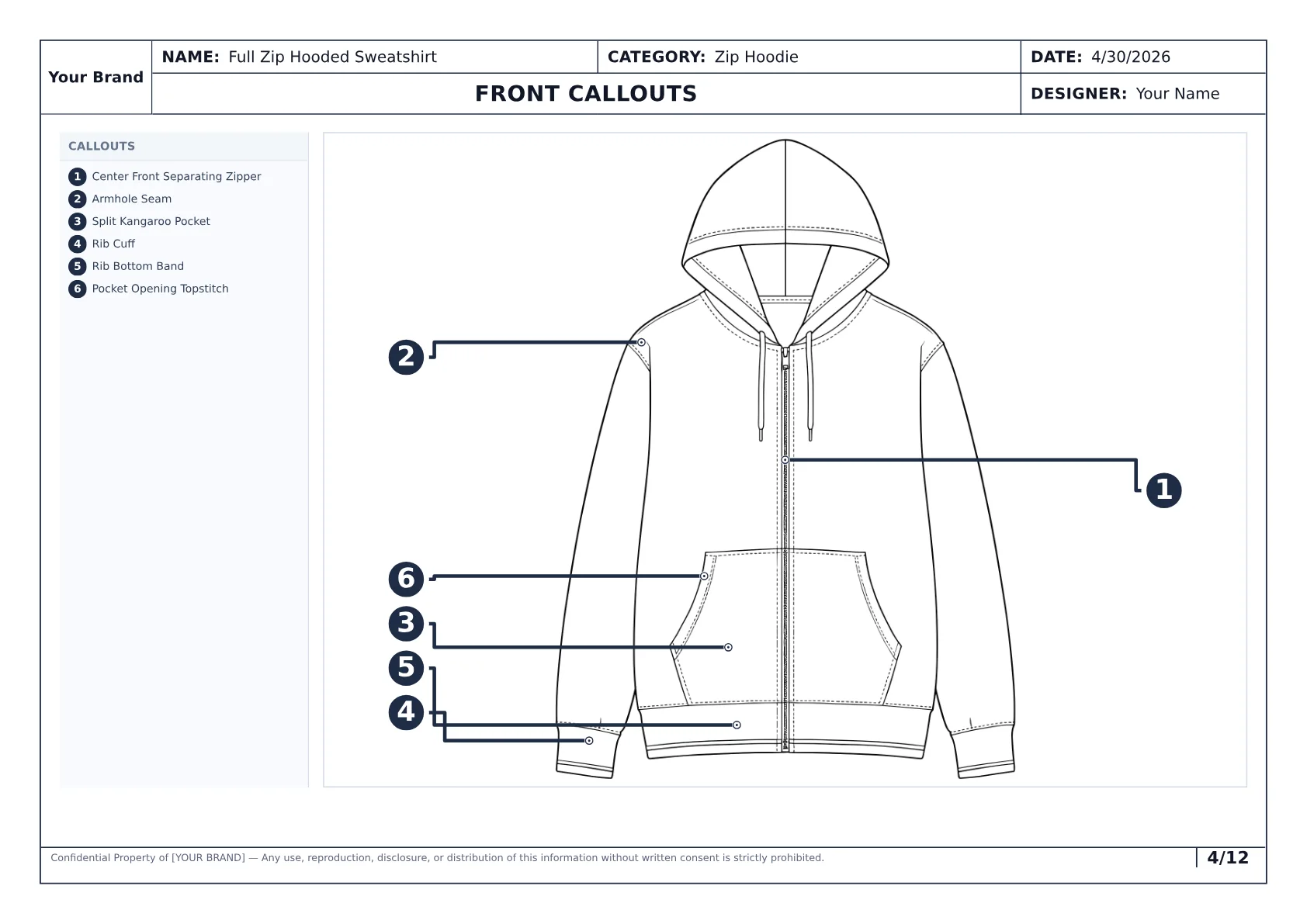
Callouts are one of the easiest places to spot output quality. Strong generated packs attach specific details to actual garment areas.
Measurements and spec sheet
The measurement section makes the garment measurable.
Include:
- sample size,
- size range,
- measurement names,
- POMs,
- values,
- units,
- graded measurements or size-range notes,
- fit notes.
If grading is not ready, say so in the surrounding notes instead of letting the factory assume.
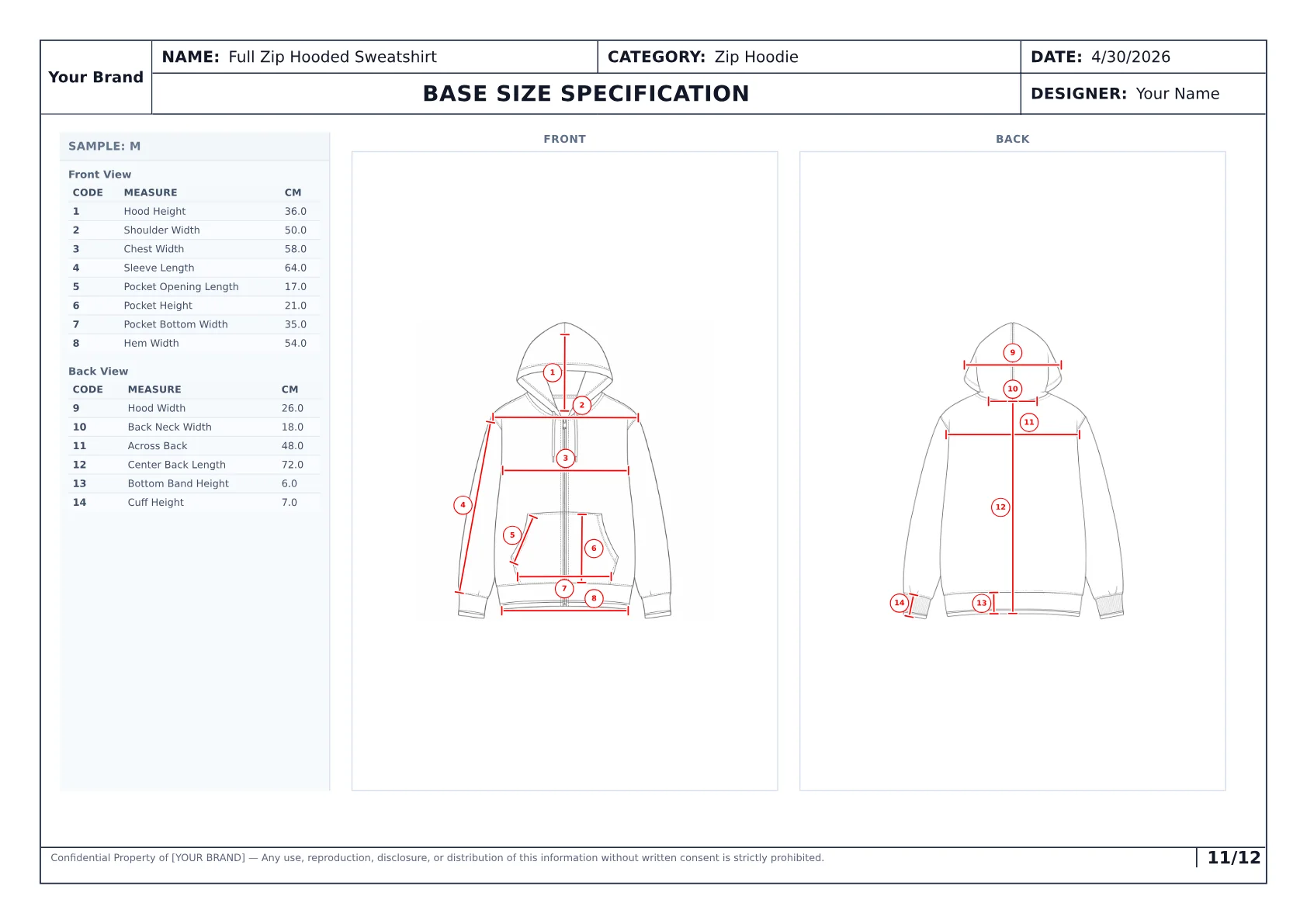
Measurements and POMs connect design intent with fit review, sample comments, and quality control.
BOM, materials, and trims
The BOM lists the components that make up the garment.
Include:
- shell fabric,
- lining or secondary fabric,
- rib or reinforcement materials,
- trims,
- hardware,
- labels,
- care information,
- artwork method,
- thread or stitch notes,
- supplier/source notes if already selected.
This is one of the places where a blank template can look organized while still being useless. The BOM needs actual garment-specific assumptions for the factory to review.
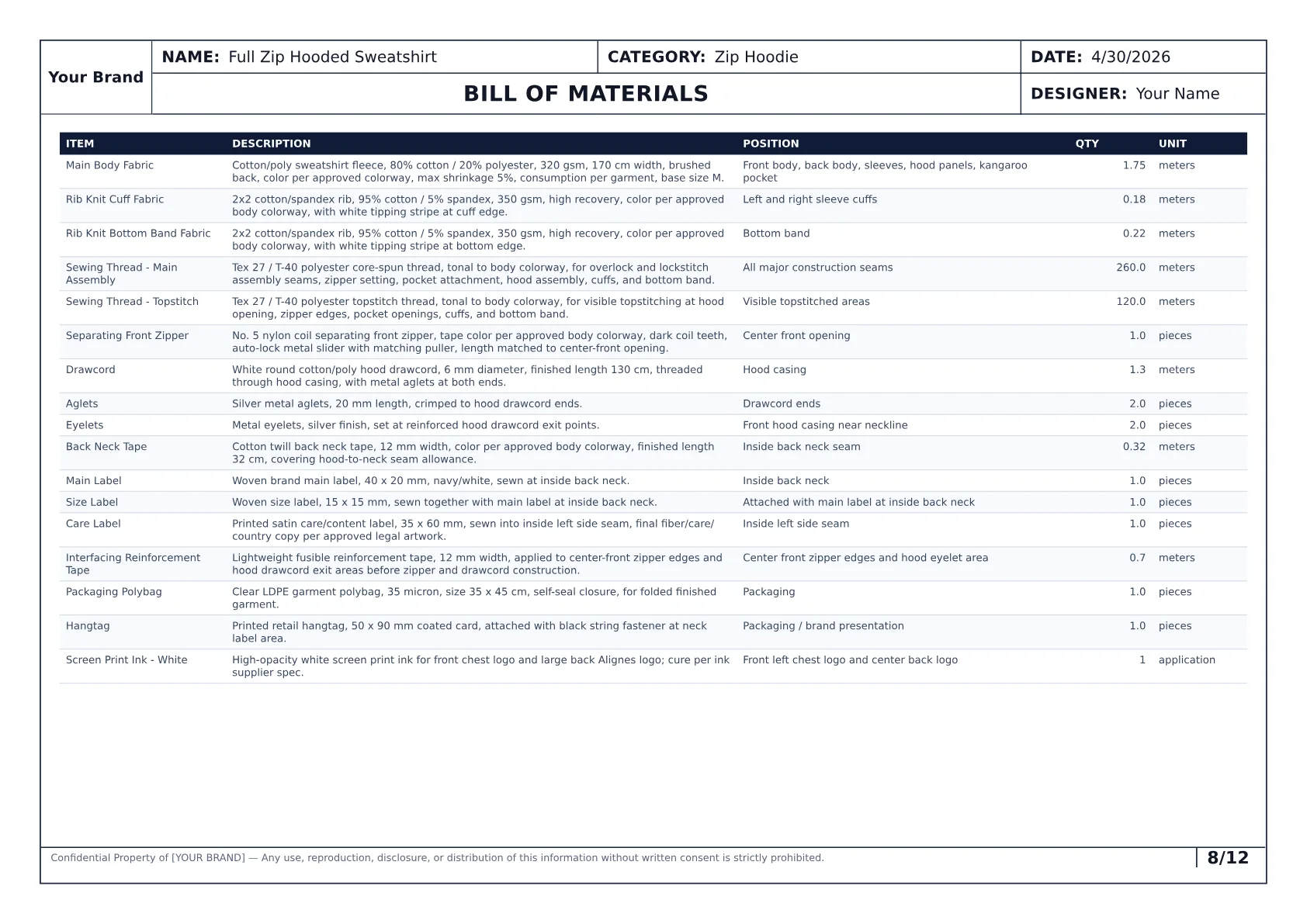
A filled BOM helps sourcing and costing because materials, trims, labels, artwork, and pending assumptions are visible.
Construction details
Construction details explain how the garment is built.
Include notes for:
- seam types,
- stitch types,
- reinforcement,
- panel relationships,
- closures,
- pockets,
- waistband, cuff, collar, hood, or hem finishing,
- special operations,
- any detail that should not be left to factory interpretation.
This section is where many early packs underperform. The visual may look good, but the factory still needs build logic.
Colorways, artwork, labels, and packaging
Colorways stay connected to the same garment structure. Artwork shows method, placement, scale, and file context when available. Labels show placement and type. Packaging belongs in the pack when it affects sampling or production.
Do not hide uncertainty. If artwork is approximate, say it is approximate. If packaging is out of scope for the first sample, say that too.
Export and document context
The final export should make the current document easy to identify.
Include:
- date,
- style name and category,
- sample size or size range when available,
- page count,
- one clean file or shared package.
Old PDFs and scattered comments create production risk. A clear export reduces it.
Comparison
Judge output quality, not just section headings
The real question is whether each section contains garment-specific information.
| Topic | Weak checklist result | Strong generated draft |
|---|---|---|
| Visuals | One reference image with no production detail. | Front and back garment views with callouts tied to specific details. |
| Specs | Empty measurement table or unnamed dimensions. | Base measurements, POMs, units, and graded measurements. |
| BOM | Generic material notes. | Component-level BOM with fabrics, trims, labels, artwork, and pending assumptions. |
| Handoff | Several files and no clear dated export. | One current export with visible date, garment context, and page structure. |
AI tech pack quality
From checklist coverage to a reviewable generated pack
What changes across the process
- 01
Step 01
Generate the sections
The draft organizes visuals, measurements, BOM, construction, colorways, artwork, labels, and export pages.
- 02
Step 02
Review the assumptions
The team checks generated specs, materials, and construction notes before sending the pack.
- 03
Step 03
Hand off the current export
The factory receives one structured package instead of scattered references and messages.
A strong AI generator should create the first structured draft, then keep the team in control before factory handoff.
Process showing checklist sections becoming a generated tech pack draft
In practice
See the checklist as a complete generated example
The hoodie example shows a 12-page AI-generated tech pack with overview, callouts, measurements, BOM, construction details, colorways, artwork, and export-ready pages.
View the generated hoodie tech packFAQ
Common questions, answered clearly.
The most important parts are the style overview, visuals, measurements, BOM, construction details, artwork and label placement, colorways when relevant, and current export context. The exact priority depends on the garment and sample stage.
Next step
Turn the checklist into a generated tech pack draft
Styneo generates structured tech pack drafts with specs, measurements, BOM, construction details, callouts, colorways, artwork, labels, and export-ready pack structure.