
Key takeaways
What matters before you keep reading
01
Manufacturer outreach works better after you prepare a complete tech pack, quantity assumptions, timeline, and product category fit.
02
The right manufacturer depends on garment type, materials, order size, sampling needs, geography, and production capabilities.
03
A strong AI-generated tech pack draft can make the first factory conversation more specific and more credible.
Reader guide
Reader guide
A quick frame before the workflow details.
For
Apparel founders, startup brands, designers, and product teams preparing to contact factories.
Read when
Best read before sending the first manufacturer email or requesting a sample quote.
You'll get
A practical outreach workflow, shortlist criteria, questions to ask, red flags, and a documentation checklist.
On this page
Follow the article through the long read and keep your place.
On this page
8 sections
Finding a clothing manufacturer is not only a search problem. It is a preparation problem.
If you contact factories with a vague concept, the conversation stays vague. If you contact them with a clear garment packet, the factory can tell you whether the style fits their capabilities, what information is missing, and what a sample or quote might require.
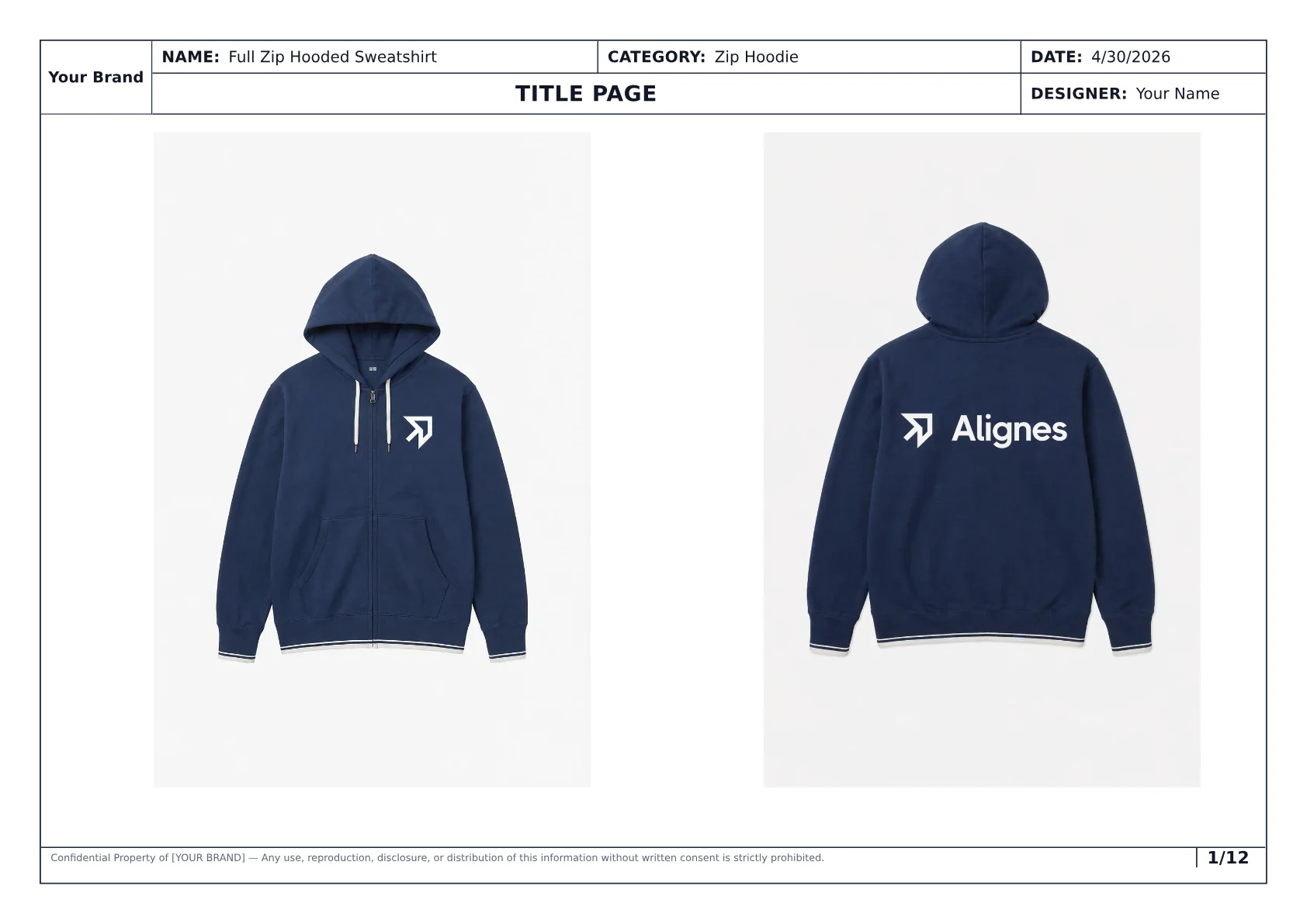
A manufacturer packet quickly shows what garment is being discussed, the dated export being reviewed, and what technical pages support the request.
Start with the garment, not the factory list
Before searching, define the product well enough that a manufacturer can evaluate the fit.
Prepare:
- garment category,
- sample size and planned size range,
- quantity estimate,
- target sample timeline,
- target production timeline,
- material direction,
- trims and branding needs,
- artwork requirements,
- quality expectations,
- current tech pack or structured design packet.
Without this, even a good factory may give a vague answer because it does not know what it is quoting.
Know what type of manufacturer you need
Different factories specialize in different product categories and production models.
Consider:
- cut-and-sew apparel,
- knitwear,
- denim,
- outerwear,
- activewear,
- swimwear,
- lingerie,
- streetwear,
- uniforms,
- accessories,
- small-batch sampling,
- full-package production,
- CMT production.
The best factory for a hoodie may not be the best factory for a structured jacket or bikini.
Where to find clothing manufacturers
Common discovery sources include:
- trade shows,
- sourcing platforms,
- factory directories,
- local production networks,
- referrals from designers or suppliers,
- textile and trim vendors,
- maker spaces and small-batch studios,
- category-specific production partners,
- apparel communities and founder groups.
Search volume can bring you to lists. The harder work is filtering.
How to shortlist manufacturers
Shortlist factories by fit, not only by location or price.
Look for:
- product category experience,
- minimum order quantity fit,
- sample-making capability,
- material familiarity,
- communication quality,
- realistic timeline,
- transparent costing process,
- willingness to review your tech pack,
- evidence of similar work,
- ability to support revisions.
If a factory ignores basic garment details or pushes for production before reviewing the tech pack, slow down.
Checklist
Manufacturer shortlist checklist
Use this before sending a sample or quote request.
Category fit
The factory has experience with the garment type and construction complexity.
Quantity fit
Minimums and sample process match your current stage.
Documentation fit
The factory can review a tech pack and respond with specific clarification requests.
Communication fit
Replies are specific, timely, and tied to the garment details you sent.
Production fit
Materials, trims, artwork, quality level, and geography align with your plan.
What to send in the first outreach email
Your first outreach should be short, clear, and document-backed.
Include:
- who you are,
- what garment you are developing,
- estimated quantity,
- sample or production timeline,
- target market or quality level,
- material or construction notes,
- whether you need sourcing support,
- a link or attachment for the tech pack,
- the specific response you want from the factory.
Do not ask "how much does it cost?" without giving enough information to quote.
Questions to ask a clothing manufacturer
Ask questions that reveal whether the factory can actually support your style.
Good questions:
- Have you made this garment category before?
- What information do you need before quoting?
- Can you support sampling before bulk production?
- What are your minimums for this category?
- Can you source these materials and trims?
- How do you handle fit revisions?
- What artwork or label files do you need?
- What is the expected sample timeline?
- What is the expected production timeline?
- Which parts of the tech pack need clarification?
Red flags
Be careful when a manufacturer:
- quotes without looking at the garment details,
- refuses to discuss sample process,
- cannot explain minimums,
- pushes a material substitution without documenting it,
- gives only vague answers,
- cannot support your category,
- ignores measurements or construction notes,
- asks for production commitment before a sample path is clear.
Why the tech pack changes the conversation
The tech pack makes your outreach more specific. Instead of asking a factory to interpret a mood board, you give it a production document.
Outreach workflow
Better manufacturer outreach starts with a better packet
What changes across the process
- 01
Step 01
Generate the tech pack draft
Start from garment images, references, sketches, and notes to create a structured first version.
- 02
Step 02
Review the details
Check specs, measurements, BOM, construction, callouts, colorways, artwork, and remaining assumptions.
- 03
Step 03
Send a focused request
Share the current packet and ask the manufacturer to respond against the garment details.
Factories can respond more seriously when they see a garment-specific handoff rather than scattered images and notes.
Process showing a tech pack draft becoming a manufacturer outreach packet
In practice
See what a stronger manufacturer packet can include
The hoodie example shows the kind of structured 12-page generated tech pack that gives factories more to react to than a sketch and a paragraph.
View the generated hoodie tech packFAQ
Common questions, answered clearly.
For serious quotes and samples, yes. You can start informal conversations without one, but a complete tech pack helps the factory understand the garment, estimate cost, and identify what still needs clarification.
Next step
Send manufacturers a clearer first packet
Styneo generates structured tech pack drafts with specs, measurements, BOM, construction details, callouts, colorways, artwork, and export-ready pages so factories can respond with fewer assumptions.