
Key takeaways
What matters before you keep reading
01
Clothing brand costs depend more on product complexity and sample rounds than on one universal budget number.
02
The tech pack is a small line item compared with bad samples, unclear quotes, and factory assumptions.
03
A generated tech pack can help lean teams move from references to a quote-ready packet faster.
Reader guide
Reader guide
A quick frame before the workflow details.
For
Founders, startup clothing brands, designers, and small teams planning their first product launch.
Read when
Best read before budgeting for samples, factories, materials, and first production.
You'll get
A cost category breakdown, budget risks, and a practical way to reduce waste before factory outreach.
On this page
Follow the article through the long read and keep your place.
On this page
6 sections
There is no single cost to start a clothing brand. A simple T-shirt drop, cut-and-sew hoodie, structured jacket, dress line, and swimwear collection all have different sample needs, material risks, minimums, and production costs.
Separate unavoidable launch costs from costs created by unclear product handoff.
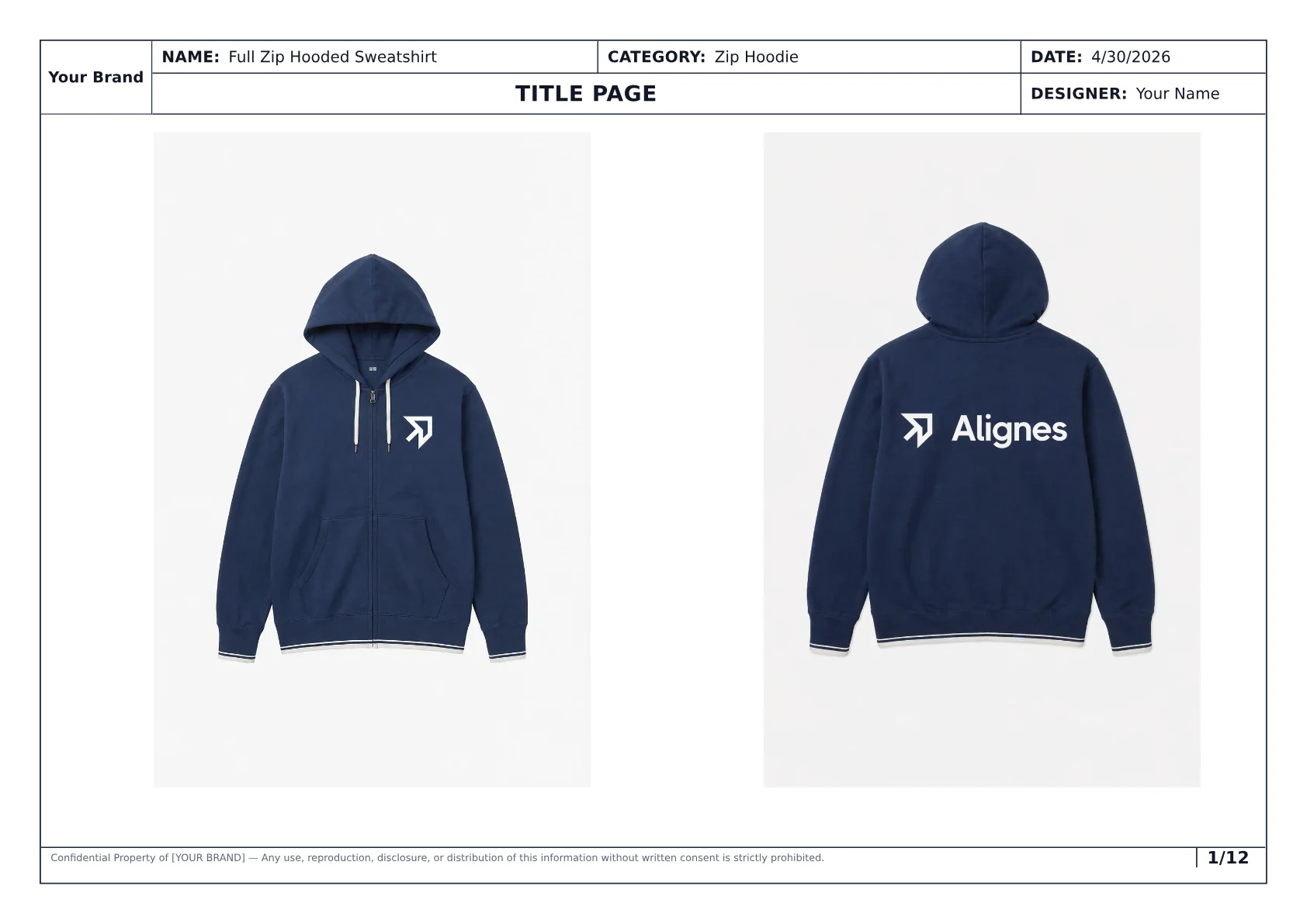
A clear tech pack is not the biggest startup cost. It is a control document that helps reduce vague quotes, missing sample inputs, and expensive revision loops.
Main startup cost categories
Most clothing brand budgets include:
- product strategy,
- design references or sketches,
- tech pack creation,
- sample making,
- sample revisions,
- materials and trims,
- labels and artwork,
- production deposit,
- packaging,
- quality control,
- ecommerce setup,
- photography,
- launch marketing,
- shipping and fulfillment,
- returns and customer support.
Many founders underbudget because they plan for production but forget sampling, revisions, and documentation.
Typical cost drivers
Cost rises when the garment has:
- custom pattern work,
- complex construction,
- unusual fabrics,
- many trims,
- custom hardware,
- print or embroidery,
- multiple colorways,
- tight fit requirements,
- strict grading,
- low order quantities,
- many sample rounds.
This is why a "simple" product can become expensive if the handoff is vague.
Where the tech pack fits
The tech pack is usually not the largest line item. But it affects several larger line items.
It helps the factory understand:
- what garment to quote,
- which materials and trims are expected,
- what measurements matter,
- how construction should work,
- where artwork and labels belong,
- which version is current,
- what questions remain open.
If the tech pack is missing, a factory may still quote. The quote may be based on assumptions that do not match the garment you want.
Checklist
Budget risks to control early
These costs often grow when the garment documentation is weak.
Extra sample rounds
Missing measurements, BOM details, or construction notes can force avoidable revisions.
Material confusion
Vague fabric and trim notes make quotes harder to compare.
Artwork rework
Placement, method, and file status should be visible before sample making.
Factory mismatch
Some factories are a bad fit for the garment category, order size, or construction level.
Production surprises
Open questions should be marked before the project moves from sample to bulk.
Lean first-style budget logic
For a lean first launch, avoid spreading the budget across too many styles.
Use this order:
- Choose one focused product.
- Collect references, sketches, notes, and target fit direction.
- Generate or create the tech pack.
- Review measurements, BOM, construction, colorways, artwork, and labels.
- Contact manufacturers with a clear packet.
- Order the first sample.
- Revise based on fit and construction feedback.
- Only then decide whether to expand the line.
The biggest saving is not skipping documentation. It is avoiding unclear work that creates extra rounds later.
How AI can help the budget
AI does not remove manufacturing costs. It can reduce the time and friction needed to create the first structured production draft.
That helps when the team has garment references and notes but not a technical designer ready to build the whole document from scratch.
Budget workflow
Use the tech pack to make costs less vague
What changes across the process
- 01
Step 01
Organize product inputs
Gather images, sketches, notes, materials, colors, artwork, and size direction.
- 02
Step 02
Generate the tech pack draft
Create structured specs, measurements, BOM, construction, callouts, colorways, artwork, and export pages.
- 03
Step 03
Ask for clearer quotes
Send the current reviewed packet so factories can respond against the garment details.
Better first drafts help founders move from idea to quote-ready packet without hiding the review step.
Process showing garment references becoming a generated tech pack and clearer manufacturer quotes
What not to cut first
Do not cut the things that reduce ambiguity:
- tech pack,
- sample review,
- measurements,
- BOM,
- construction notes,
- fit feedback,
- artwork placement,
- factory communication.
Cut scope first. A focused style with a clear handoff is usually better than a broad mini-collection with vague documentation.
In practice
See what a cost-ready tech pack can include
The hoodie example shows a generated 12-page pack with overview, measurements, BOM, construction details, callouts, colorways, artwork, and export-ready structure.
View the generated tech pack exampleFAQ
Common questions, answered clearly.
Start with one focused style, clear garment references, a complete tech pack, realistic sample plan, and small quantity assumptions before expanding into many products.
Next step
Reduce avoidable sample and quote confusion
Styneo generates structured tech pack drafts with specs, measurements, BOM, construction details, callouts, colorways, artwork, and export-ready pages so factories can quote and sample from clearer information.